Source ar toos salt for elisa diagnostic, research, and teaching
Compare 30 listings for ar toos salt for elisa from verified Chinese manufacturers. Buyers can review specifications, pricing, and delivery times for biochemical reagents used in diagnostic testing, scientific research, and laboratory teaching.
Key considerations
Products List




Comprehensive Sourcing Guide
Strategic Sourcing Guide for AR Grade Toos Salt in ELISA Applications
The procurement of high-purity biochemical reagents, specifically AR grade Toos salt for ELISA applications, requires a disciplined approach that balances technical specifications with supply chain reliability. Buyers entering this market must navigate a landscape where product attributes are often presented as observations rather than universal guarantees. The core keyword "ar toos salt for elisa" points to a specialized segment of laboratory reagents where precision is paramount. This guide outlines the critical factors for sourcing these materials, drawing strictly from observed market data and established procurement principles for biochemical reagents.
Technical Specifications and Chemical Properties
When evaluating AR grade Toos salt, the primary focus must be on the physical and chemical attributes that ensure compatibility with Enzyme-Linked Immunosorbent Assay (ELISA) protocols. Based on observed product data, the material is consistently characterized as a pure white crystalline powder. This visual characteristic is a critical initial indicator of purity, as discoloration can suggest degradation or contamination. The molecular weight of the specific variants observed ranges between 313.30 and 347.36, with some listings indicating a molecular weight of 343.37. Buyers must verify the exact molecular weight against their specific assay requirements, as slight variations in molecular composition can affect molarity calculations and reaction kinetics.
The chemical formula is another essential specification, with observed data citing formulas such as C13h22nnao6s and HNa2O4P depending on the specific salt variant. Purity is a non-negotiable metric; the market data indicates that high-purity grades are typically listed at 99% or above. For ELISA applications, which rely on sensitive antibody-antigen interactions, impurities can lead to high background noise or false positives. Therefore, the "AR" (Analytical Reagent) grade designation implies a standard suitable for technical analysis, but buyers should confirm that the specific batch meets the "Above 99%" threshold observed in the market. Solubility is another key property; the observed data confirms that these salts are soluble in water, a prerequisite for preparing buffer solutions and washing steps in ELISA workflows.
Compliance, Certification, and Regulatory Standards
In the procurement of biochemical reagents, compliance with international standards is often a prerequisite for laboratory accreditation. While specific certification names are not universally listed in the provided product data, the classification of these items as "Biochemical Reagents" and "Diagnostic Testing Reagents" suggests they are intended for regulated environments. Buyers should verify that the supplier adheres to recognized quality management systems, such as ISO standards, though specific certification numbers must be confirmed directly with the vendor.
The product origin is a significant factor in compliance. Observed data places the place of origin in Hubei Province, China, specifically Ezhou City. While this location is a known hub for chemical manufacturing, buyers must ensure that the export documentation aligns with the regulations of their destination country. The "Standard" classification mentioned in the product attributes refers to the packaging and content standards, such as 50g/bottle or 10g/bottle, rather than a regulatory certification. It is crucial to distinguish between the product's internal standard (e.g., AR grade) and external regulatory compliance. Buyers should request a Certificate of Analysis (CoA) for every batch, which should detail the specific purity, molecular weight, and storage conditions to ensure the product matches the observed specifications of 99% purity and specific molecular weights.
Cost Drivers and Pricing Dynamics
The pricing for AR grade Toos salt is influenced by several dynamic factors, including purity levels, packaging formats, and order volume. The observed price range in the market spans from $0.05 to $5,000 USD. This wide disparity indicates that the cost is heavily dependent on the quantity ordered and the specific packaging configuration. Small quantities, such as 10g or 50g bottles, may carry a higher unit cost due to packaging and handling overheads, whereas bulk orders can significantly reduce the per-unit price.
The Minimum Order Quantity (MOQ) is another critical cost driver. The observed MOQ range is extensive, spanning from 1 unit to 150,000 units. For small research laboratories, an MOQ of 1 box or 1 bottle is essential to manage inventory costs. However, for large-scale diagnostic manufacturers, the ability to source at the higher end of the MOQ spectrum can unlock substantial cost savings. Buyers must balance their immediate needs with the economic benefits of bulk purchasing. Additionally, the customization options available, such as OEM packing, can influence the final price. Custom packaging often incurs additional setup costs but may be necessary for specific supply chain requirements or branding.
Typical Applications and Usage Scenarios
The primary application for AR grade Toos salt is in diagnostic testing reagents and biological research. The observed product attributes explicitly list "Diagnostic Testing Reagents," "Teaching Reagents," and "Laboratory Reagents" as usage categories. In the context of ELISA, these salts are likely used as components in buffer solutions, washing buffers, or as stabilizers in the assay matrix. The specific usage notes indicate suitability for "Biological Purpose," "Tissue Medium Purpose," and "Pro Analysis," highlighting their versatility in various biochemical workflows.
The application extends beyond simple mixing; the "Good Water Solubility" and "Pure White Crystalline Powder" characteristics suggest that these salts are designed to dissolve rapidly and completely, ensuring homogeneity in reagent preparation. This is vital for ELISA, where inconsistent buffer composition can lead to variable results. The "Standard" content classification implies that the product is intended for general laboratory use, but the "Specific Usage" notes also mention "Practical Use" and "Technical Grade," suggesting that these reagents are robust enough for routine, high-volume testing environments. Buyers should ensure that the selected product matches the specific requirements of their ELISA kit or protocol, particularly regarding ionic strength and pH buffering capabilities.
Supplier Evaluation and Supply Chain Reliability
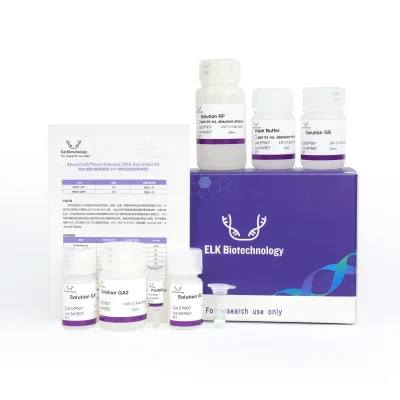
Selecting a reliable supplier is as important as the product specifications themselves. The observed data identifies "Hubei Xindesheng" as a manufacturer and "ELK Biotechnology" as a brand name associated with these products. However, buyers should not rely on a single supplier but rather evaluate a pool of vendors based on their ability to meet the observed specifications. Key evaluation criteria include the consistency of the "White Powder" appearance, the accuracy of the molecular weight listings, and the reliability of the "3-5 days" delivery time observed in the market.
Logistics and transportation conditions are also critical. The observed data specifies "Room Temperature" for transportation and "Avoid Light and Moisture" for storage. This indicates that the supply chain must maintain a controlled environment to prevent degradation. Suppliers offering "Ice pack" shipping options, as noted in some product listings, demonstrate an understanding of the need for temperature control during transit, even if the product is stable at room temperature. Buyers should verify the supplier's track record for maintaining these conditions and their ability to handle the "FedEx/DHL" shipping methods observed in the market.
Quality Control and Storage Protocols
Quality control for AR grade Toos salt involves rigorous adherence to storage and handling protocols. The observed "Storage Conditions" consistently emphasize the need to "Avoid Light and Moisture" or "Protected From Light and Moist." This sensitivity to environmental factors means that once the product is received, it must be stored in a cool, dry, and dark environment to maintain its 99% purity. Any deviation from these conditions can lead to clumping, degradation, or loss of efficacy.
The packaging plays a vital role in quality control. The observed data lists "Bottle" and "Carton" as standard packaging types, with specific standards like "50g/bottle" and "10g/bottle." Buyers should inspect the packaging upon receipt to ensure it is intact and that the seal is unbroken. The "Customization" option allows for tailored packaging, which can enhance protection during transit. Furthermore, the "Source" is listed as "Dry Powder," which implies that the product is free from moisture at the time of manufacture. Buyers must verify that the dry powder state is maintained throughout the supply chain to prevent premature hydration or contamination.
Long-Term Procurement Considerations
Sourcing AR grade Toos salt for ELISA applications is not a one-time transaction but a long-term partnership that requires strategic planning. The "Customization" availability and "OEM Packing" options suggest that suppliers are willing to adapt to the buyer's specific needs, which is beneficial for long-term contracts. Buyers should consider the scalability of the supplier, ensuring they can meet the "1-150,000" MOQ range as the buyer's research or production needs grow.
The "Delivery Time" of "3-5 days" is a competitive advantage that supports just-in-time inventory management. However, buyers should also consider the potential for supply chain disruptions and establish relationships with multiple suppliers to mitigate risk. The "High Purity" of 99% and the specific "Molecular Weight" data provide a baseline for quality, but buyers must implement their own quality control measures, such as periodic testing of incoming batches, to ensure consistency. By focusing on these long-term factors, buyers can secure a reliable supply of high-quality AR grade Toos salt that supports the integrity of their ELISA testing and research outcomes.
| Attribute | Observed Value | Procurement Verification Point |
|---|---|---|
| Appearance | Powder / Pure White Crystalline Powder | Visual inspection for color and texture consistency |
| Purity | 99% / Above 99% | Review Certificate of Analysis (CoA) for batch-specific purity |
| Molecular Weight | 313.30 - 347.36 | Verify against specific assay requirements |
| Storage | Avoid Light and Moisture | Confirm storage facility conditions match requirements |
| Delivery Time | 3-5 Days | Assess logistics reliability and lead time consistency |
| Packaging | Bottle / Carton (10g-50g) | Inspect packaging integrity upon receipt |
| Origin | China (Hubei/Ezhou) | Verify export documentation and origin compliance |
| Solubility | Soluble (Water) | Perform dissolution test if protocol is critical |
FAQs
What is the purity level of AR grade Toos salt?
The product typically offers a purity level of 99% or above, suitable for analytical reagent applications. Buyers should verify batch-specific certificates of analysis to confirm this threshold matches their ELISA protocol requirements.
How should AR grade Toos salt be stored?
Store the dry powder in a cool, dry environment while protecting it from light and moisture. Proper storage prevents degradation and maintains the 99% purity required for sensitive biochemical and diagnostic testing workflows.
Can I customize the packaging for this reagent?
Yes, customization and OEM packing options are available for this biochemical reagent. Buyers can request specific packaging formats like bottles or cartons to suit their laboratory inventory and branding needs.
What is the delivery time for this product?
The standard delivery time observed in the market is between 3 to 5 days. This lead time supports just-in-time inventory management for laboratories requiring quick access to diagnostic and research reagents.
Which molecular weight variants are available?
Available variants show molecular weights ranging from 313.30 to 347.36, with some listings at 343.37. Verify the exact weight against your assay calculations to ensure accurate molarity and reaction kinetics.
What is the minimum order quantity for this salt?
The minimum order quantity ranges from 1 unit up to 150,000 units depending on the supplier. Small research labs can start with single bottles, while large manufacturers can leverage bulk pricing tiers.
Where is this product manufactured?
The product originates from Hubei Province, China, specifically Ezhou City. Buyers should verify export documentation to ensure compliance with international regulations for chemical reagents entering their destination country.